
In the classic SaaS model, the vendor hosts the application, data plane, infrastructure, networking, and operations in its own cloud account. In BYOC (Bring Your Own Cloud), that boundary shifts: the customer keeps the workload, data, network controls, audit logs, and often billing inside their own cloud estate, while the vendor still provides a managed product experience. That definition is a good start, but it is incomplete.
In practice, BYOC does not always mean "give the vendor a fresh cloud account and let them deploy."
Enterprises, regulated organizations, AI infrastructure teams, and platform engineering groups all have different constraints. Some can provide a dedicated account. Some require deployment into an existing VPC. Some only allow workloads onto approved Kubernetes clusters. Some cannot allow any internet connectivity at all.
That is why BYOC is better understood as a spectrum of deployment and operating models.
- 1Vendor SaaS
- 2BYOC-Account
- 3BYOC-VPC
- 4BYOC-K8s
- 5Air-gapped / disconnected
The deeper point: BYOC Anywhere is not just infrastructure placement. It is the ability to deliver, secure, operate, meter, upgrade, observe, and govern software across many customer-controlled environments.
Why customers need different BYOC flavors
Customers ask for BYOC for different reasons, and those reasons often compound.
Some want data residency and sovereignty: data must stay in a specific region, account, cloud, or jurisdiction. Others want security control: private networking, customer-owned keys, audit logs, no vendor access to raw data, and policy enforcement through their own identity and governance systems.
Some buyers care about commercial alignment. They already have committed cloud spend, reserved capacity, GPU reservations, or internal chargeback models. Running software in their own account helps them use those commitments instead of paying twice.
For AI and data-heavy workloads, the reason is often data gravity. Moving large volumes of logs, embeddings, model outputs, files, or telemetry into a vendor SaaS environment can be expensive, slow, or prohibited. BYOC keeps compute closer to the data.
Platform teams may also require standardization. They already run approved VPC patterns, Kubernetes clusters, service meshes, secrets managers, CI/CD systems, observability stacks, and supply-chain scanning. A vendor that cannot fit into those patterns creates operational friction.
Finally, regulated environments may require disconnected or air-gapped delivery, where software updates, container images, licenses, and telemetry cannot assume live internet access. Air-gapped environments require offline update workflows, mirrored repositories, and controlled artifact transfer processes. (Ubuntu's air-gapped system documentation)
The four main BYOC variants
1. BYOC-Account (Bring your own Cloud Account)
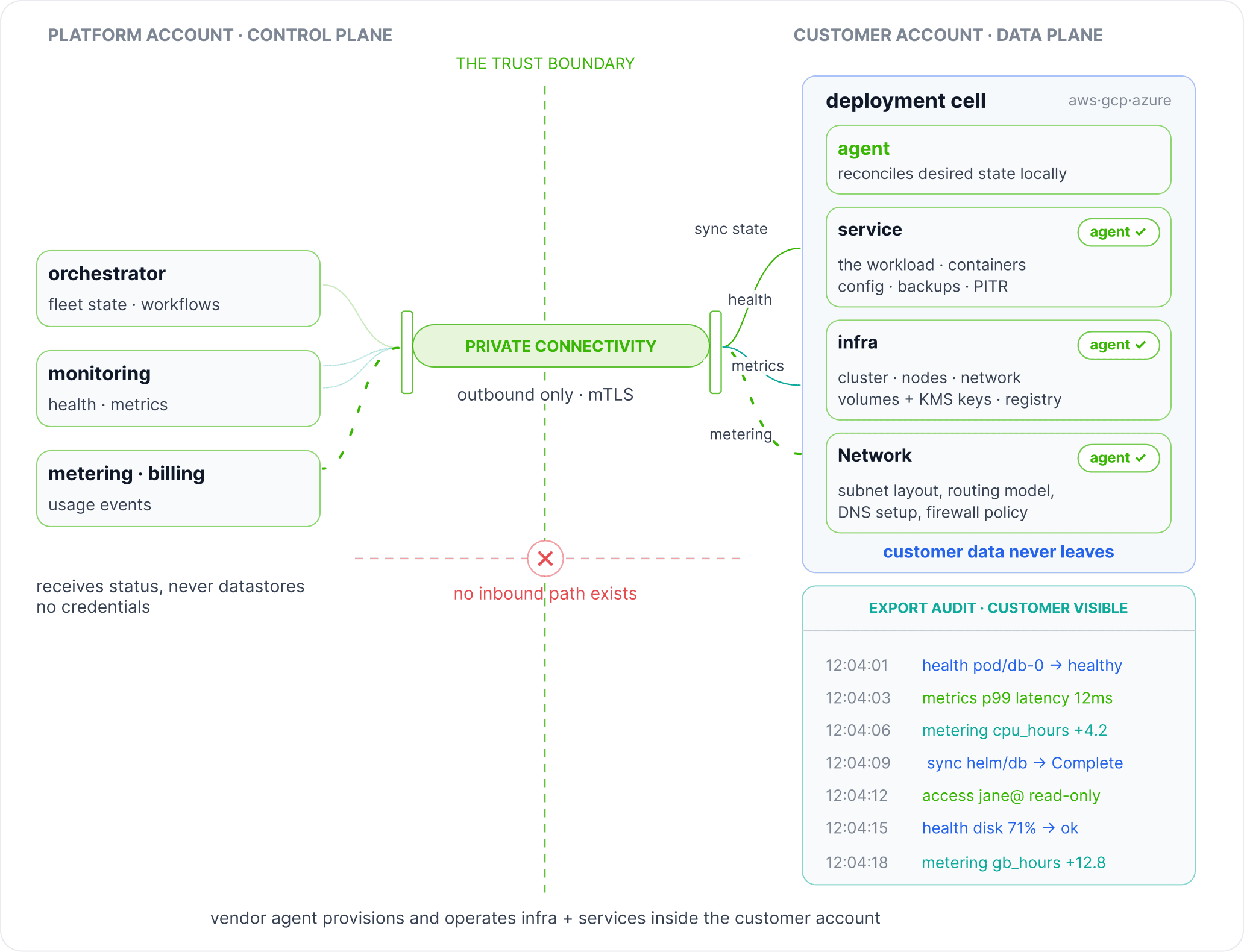
Figure 1: A standard BYOC-Account deployment model.
BYOC-Account is the most common mental model. The customer creates a dedicated cloud account, project, or subscription. The vendor deploys its data plane into that environment, usually through scoped IAM roles and deploying an agent that automates the rest (or manually through a bunch of Terraform, CloudFormation, one-off installers/scripts).
From the customer's perspective, this model feels like:
- 1Create account
- 2Approve IAM role
- 3Vendor deploys
- 4Service runs in customer cloud
This flavor works well when the customer wants clean isolation without forcing the vendor into every detail of their existing network. The customer owns the account boundary, billing, cloud logs, region choice, and many policy controls. The vendor owns the product lifecycle: deployment, scaling, health checks, upgrades, and support.
BYOC-Account is often the right starting point because it creates a strong separation of concerns. But it is not enough for customers with strict networking, routing, private endpoint, or internal platform requirements.
2. BYOC-VPC (Bring your own VPC)
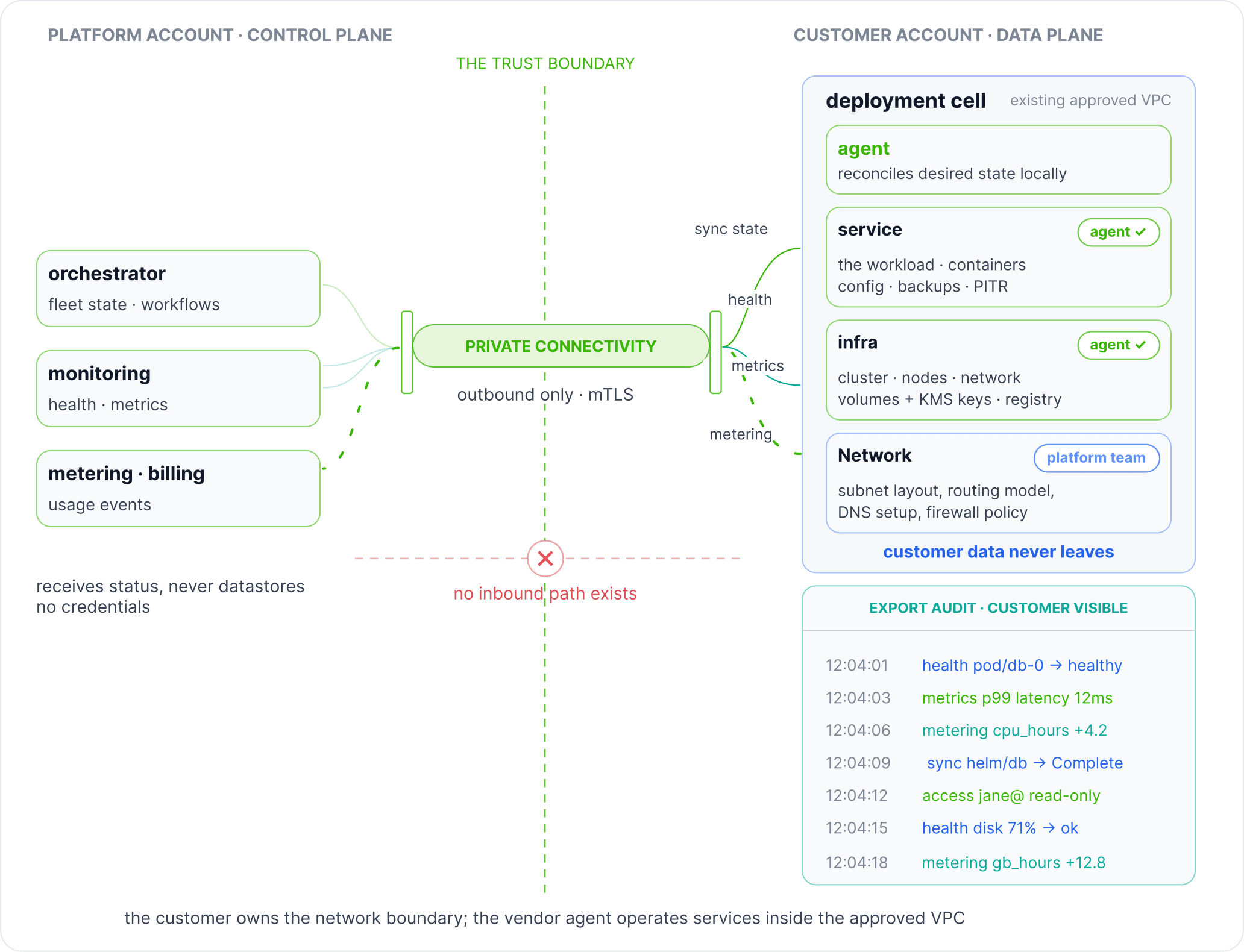
Figure 2: A secure BYOC-VPC deployment with a customer-approved network boundary.
BYOC-VPC goes one level deeper: the software must run inside a customer-approved network boundary. Instead of simply deploying into a fresh account, the vendor must integrate with an existing VPC, VNet, subnet layout, routing model, DNS setup, firewall policy, private endpoints, and egress controls.
From the customer's perspective, this model feels like:
- 1Provide VPC / subnets
- 2Approve routes, endpoints, and security groups
- 3Deploy privately
This is important when customers require:
- No public endpoints.
- Private connectivity to internal systems.
- Egress allowlists.
- PrivateLink-style connectivity.
- Centralized firewall inspection.
- Internal DNS and certificate policies.
- Existing network segmentation.
For example, private connectivity services such as AWS PrivateLink are designed to let customers connect privately to services without requiring public IPs, internet gateways, NAT devices, or public routing paths. (AWS PrivateLink)
BYOC-VPC is more demanding than BYOC-Account because the deployment has to respect the customer's network architecture across clouds. The vendor cannot assume open outbound internet, default DNS, permissive security groups, or vendor-managed ingress.
3. BYOC-K8s (Bring your own Kubernetes)
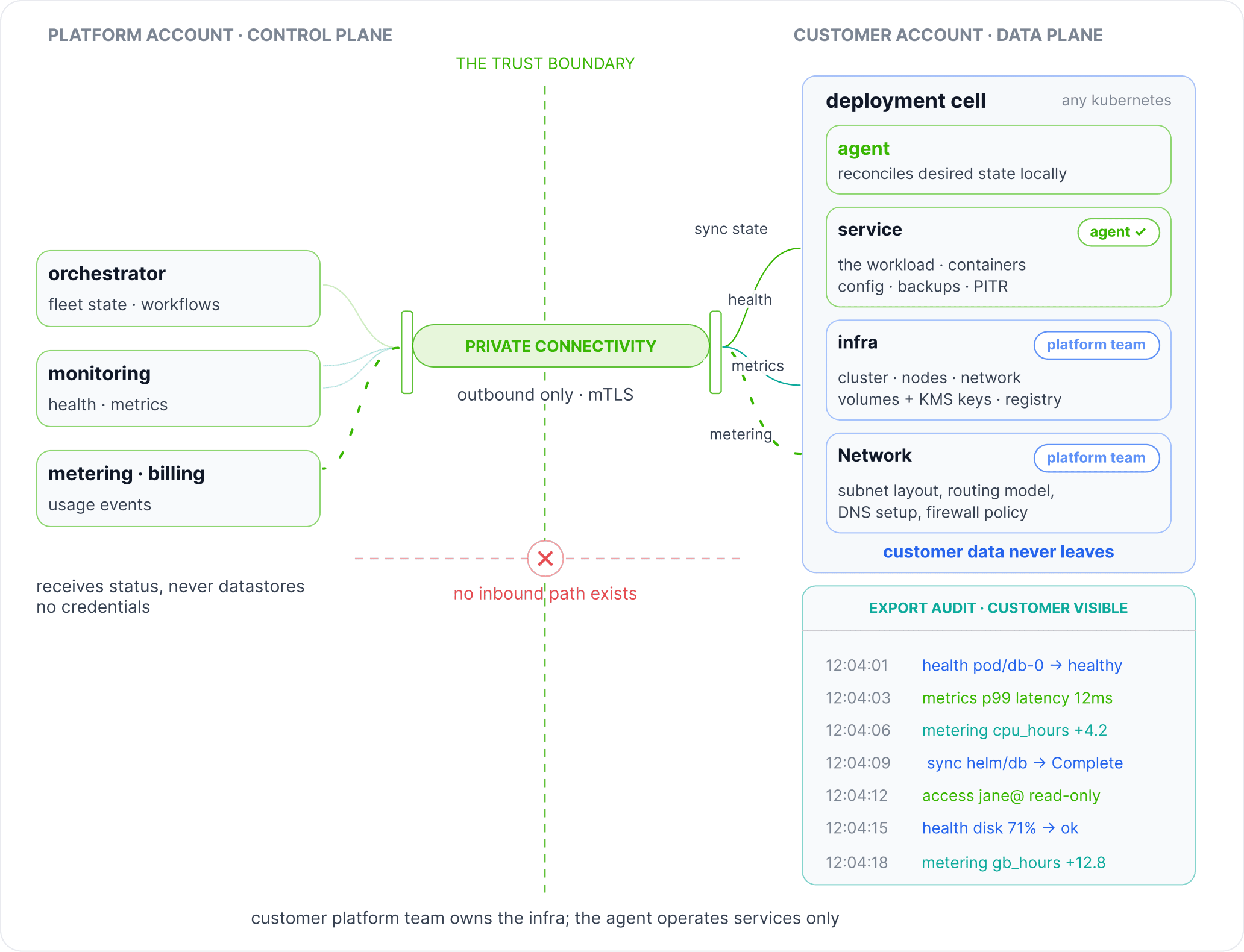
Figure 3: A standardized BYOC-K8s deployment within a customer-managed Kubernetes runtime.
BYOC-K8s means the customer provides the Kubernetes runtime. The vendor deploys into a customer-managed Kubernetes cluster, often through Helm charts, operators, controllers, CRDs, namespaces, service accounts, and container images.
From the customer's perspective, this model feels like:
- 1Provide cluster
- 2Install Helm / operator
- 3Connect license / control plane
- 4Operate workloads
This flavor is common when customers already standardize around Kubernetes across clouds, on-prem, edge, or GPU infrastructure. Kubernetes is explicitly designed as a portable, extensible platform for managing containerized workloads and services, which makes it a natural abstraction layer for multi-environment delivery. (Kubernetes for multi-environment delivery)
BYOC-K8s gives platform teams more control. They can enforce their own admission policies, image scanners, secrets management, storage classes, ingress controllers, service mesh rules, node pools, GPU scheduling, and observability integrations.
But it also changes the responsibility model. The vendor no longer controls the full substrate. Cluster version, CNI behavior, storage drivers, node autoscaling, resource quotas, pod security settings, and image registry access can vary widely. The vendor also does not provision the underlying infrastructure, so infra provisioning, sizing, upgrades, and troubleshooting often require coordination with the customer's platform team. This is especially challenging in traditional on-premises environments, where hardware, networking, and storage abstractions vary significantly.
4. Air-gapped Software Distribution
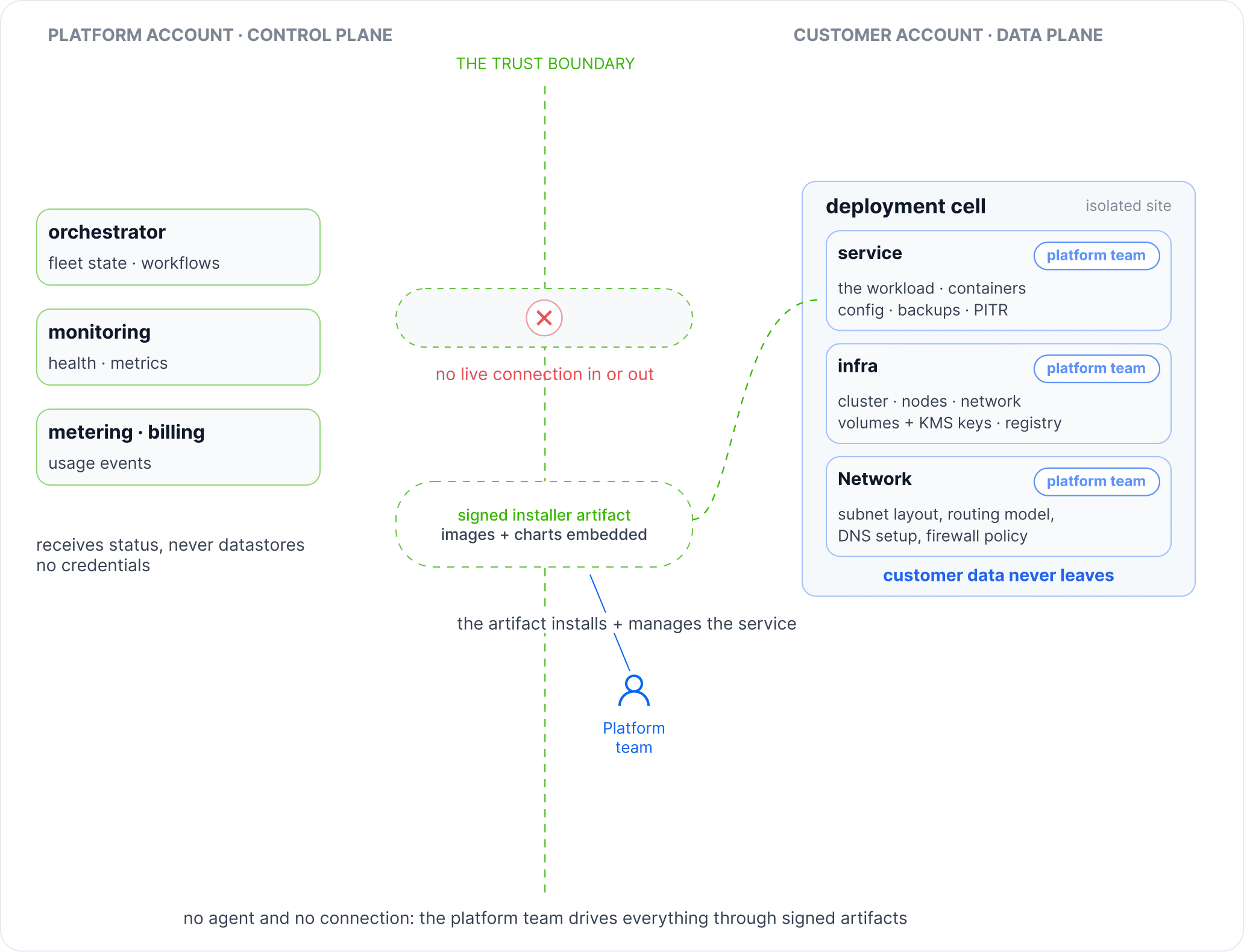
Figure 4: A highly secure air-gapped deployment with customer-controlled offline distribution.
Air-gapped is not exactly BYOC, but it is a natural extension of the same customer-controlled delivery spectrum. In this model, the software runs in an environment with no direct internet connectivity, often for defense, public sector, critical infrastructure, financial services, healthcare, or sovereignty reasons.
From the customer's perspective, this model feels like:
- 1Receive signed artifacts
- 2Scan / approve (supply chain)
- 3Import offline
- 4Install / upgrade locally
Air-gapped delivery requires a different operating model. The vendor cannot assume live telemetry, remote debugging, online license checks, automatic image pulls, hosted package repositories, or continuous control-plane access. Updates, patches, container images, dependency repositories, and documentation often need to be mirrored or transferred into the environment through controlled processes. (Highly secure, air-gapped Ubuntu architectures)
This is where the BYOC idea reaches its hardest form: the customer owns not only the infrastructure boundary, but also the connectivity boundary, update boundary, support boundary, and operational evidence boundary.
How each flavor maps to customer needs
| Customer need | Best-fit BYOC flavor | Why it helps |
|---|---|---|
| Use committed cloud spend | BYOC-Account | Workloads run under customer billing. |
| Minimize vendor access | BYOC-Account / VPC | Requires scoped permissions, auditability, governance and zero-trust controls. |
| Keep data in customer-controlled cloud | BYOC-Account / VPC | Dataplane stays inside the customer boundary. |
| Integrate with customer supply chain | BYOC-Account / VPC | Enables image scanning, artifact signing, private registries, and approvals. |
| Enforce private networking | BYOC-VPC | Supports private routes, endpoints, DNS, e2e encryption and egress controls. |
| Reuse internal platform standards | BYOC-K8s | Runs on approved clusters, policies, and tooling. |
| Support on-prem or edge | BYOC-K8s / Air-gapped | Kubernetes or offline bundles can span non-cloud environments. |
| Meet strict sovereignty or classified requirements | Air-gapped | Removes dependency on live external connectivity. |
The Security Challenge: BYOC must be secure by design
A serious BYOC platform has to implement more than deployment automation. It has to deliver the security posture enterprises expect from modern infrastructure.
That includes:
Least-privilege permissions. The vendor should receive only the permissions required to install, operate, update, and observe the product. Permissions should be scoped by account, project, namespace, resource type, and lifecycle phase.
End-to-end encryption. Data should be encrypted in transit and at rest, with clear support for customer-managed keys where required.
Zero-inbound access. Many customers will not allow inbound access from a vendor network. The safer pattern is often an outbound-only agent or runner initiated from the customer environment.
Egress allowlists. Customers need to know exactly which domains, APIs, package repositories, control-plane endpoints, and telemetry destinations the product requires.
Private connectivity. Some environments require private link, private service connect, VPC endpoints, peering, VPN, or dedicated network paths instead of public internet access.
Customer supply-chain integration. Container images, packages, Terraform modules, Helm charts, SBOMs, signatures, attestations, vulnerability scans, and provenance metadata need to fit into customer approval workflows.
Governance and auditability. Customers need logs, evidence, change history, access records, policy mappings, clear ownership boundaries, and governance controls to control the access levels.
This aligns with the broader zero-trust principle that no user, device, workload, or network location should receive implicit trust simply because it sits inside a perimeter. NIST describes zero trust as a shift away from static network-based trust toward resource-level access decisions. (NIST's SP 800-207 Zero Trust Architecture)
For a deeper dive into the security requirements, I'd recommend reading BYOC Anywhere, which lays out the "10 Commandments" for operating software in customer environments you don't own.
The Portability Challenge: Running Across Every Customer Environment
The next challenge is environmental diversity.
A narrow BYOC product might work only in AWS, only in a fresh account, only with public egress, only in one region, and only with vendor-managed Terraform. That may be enough for early deals, but it is not enterprise-ready and will not scale.
BYOC has to work across:
- Major clouds: AWS, Azure, Google Cloud.
- Sovereign cloud regions.
- Neocloud and GPU cloud providers.
- Customer-managed Kubernetes.
- OpenShift and enterprise Kubernetes distributions.
- On-prem data centers.
- Edge environments.
- Internet-restricted and air-gapped networks.
Each environment changes the assumptions. Identity, networking, storage, load balancing, DNS, secrets, GPUs, logging, metrics, security scanning, and upgrade workflows all differ. The product architecture has to isolate those differences behind a consistent delivery model.
The mistake is assuming BYOC is a cloud-specific problem. It is really a portability problem across different clouds, neoclouds, and on-prem environments. Building and maintaining consistent IaC across multiple environments is a huge challenge in itself. The interesting thing is that even that is not enough, and that brings us to the next challenge.
The Operations Challenge: Delivering a Managed Service After Deployment
The hardest part of BYOC is not day one. It is day two. A real BYOC platform must handle the full lifecycle:
- 1Provision
- 2Deploy
- 3Configure
- 4Govern
- 5Upgrade
- 6Meter
- 7Observe
- 8Operate
That means solving:
Infrastructure provisioning and management. Having consistent IaC across multiple environments to unify infrastructure including accounts, networks, IAM roles, subnets, clusters, storage, DNS, certificates, and secrets is one thing. But infrastructure management has to be tenant-aware, transaction-safe across different workflows, and AI-enabled. Unfortunately, tools like Terraform fall short on all these dimensions and require a BYOC control plane to deal with these problems.
Customer-managed deployments. Subscribe, deploy, customize, configure, visualize, and notify.
Governance controls. Clear break-glass procedures, approval workflows, audit trails, RBAC, SSO, enterprise IdP integration, secrets, customer networks, tenant isolation, and customer-controlled access.
Upgrades and patches. Safe rollouts, versioned releases, rollback, dependency management, configuration drift, approvals, pipelines, and emergency fixes.
Metering and billing. Usage collection, aggregation, billing, invoicing, analytics, and integration with payment processors like Stripe and cloud marketplaces.
Licensing. Online activation for connected environments; signed offline licenses for disconnected ones.
Observability. Health, logs, metrics, traces, alerts, SLOs, and support bundles that do not leak customer data.
Day-2 automation. Backups, restores, snapshots, alerting, recommendations, scaling, certificate rotation, secret rotation, failover, diagnostics, policy checks, and compliance evidence.
Cloud providers describe security and operations as shared responsibilities, where the exact boundary depends on the services used and how customers configure them. BYOC introduces a similar shared responsibility model between the software vendor and the customer: the customer owns the environment, while the vendor must still deliver a managed product experience. (AWS's shared responsibility model)
BYOC is a Product Architecture, Not a Deployment Script
The simplest BYOC demo may look easy: connect to a customer account, run Terraform, deploy containers, and show a working service. Production BYOC is a completely different ballgame.
It requires a control plane that can manage many isolated customer environments without overreaching. It requires runners or agents that can operate with minimal permissions. It requires repeatable infrastructure definitions, secure artifact delivery, environment discovery, policy enforcement, observability, upgrade orchestration, and support workflows.
The other misconception is that BYOC is often described too narrowly. It is not just "bring a fresh account." That is only one flavor.
There is BYOC-Account for clean cloud ownership.
There is BYOC-VPC for private network integration.
There is BYOC-K8s for platform-standardized runtime delivery.
There is Air-gapped delivery for disconnected and highly regulated environments.
And across all of these models, vendors still need to solve zero-trust security, multi-environment portability, supply-chain integration, lifecycle automation, metering, licensing, observability, governance, and day-2 operations.
The real promise of BYOC Anywhere is not that software can be installed somewhere else. It is that customers can keep control of their infrastructure, data, network, and compliance posture while still getting a managed product experience.
That is a much larger architectural undertaking than a basic "connect the account and deploy" script. It is the next evolution of enterprise software delivery.